8 Wastes in Construction

Over the last few weeks we have covered a number of topics related to Lean Construction Principles, the Daily Huddle, Pull Planning, Gemba Walks and the 5 S’s. Each of these play an important role in your Lean Tool Box. Today we are going to cover the 8 Wastes and how to help reduce their impact on your Project.

Over the years manufacturing has seen drastic improvement in the production of goods and this has lead to great improvements with in this industry. This same improvement has not been recognized within the construction industry. Those of us practicing Lean Construction are looking to change that, but to make this happen we must first identify the 8 Wastes. Traditionally this is associated with the amount of waste identified on the project. This can also be said as anything that is identified that does not add value to your project.

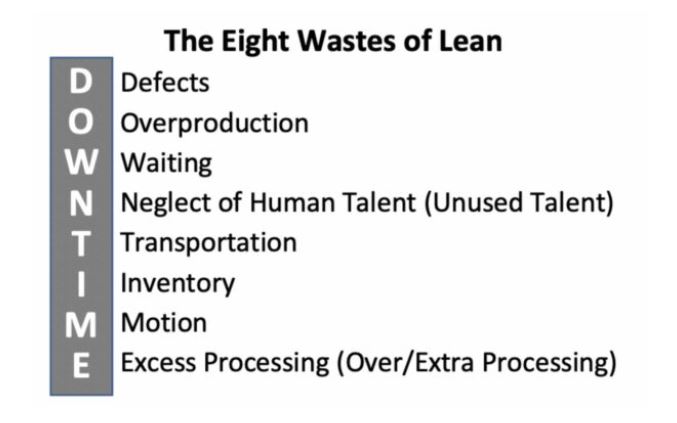
The 8 Wastes consist of Defects, Over Production, Waiting, Non-Utilized Talent, Transportation, Inventory, Motion and Excess. Each of these have an impact on how your job runs and by being able to recognize their impact you will continue to sharpen your Lean Tools.
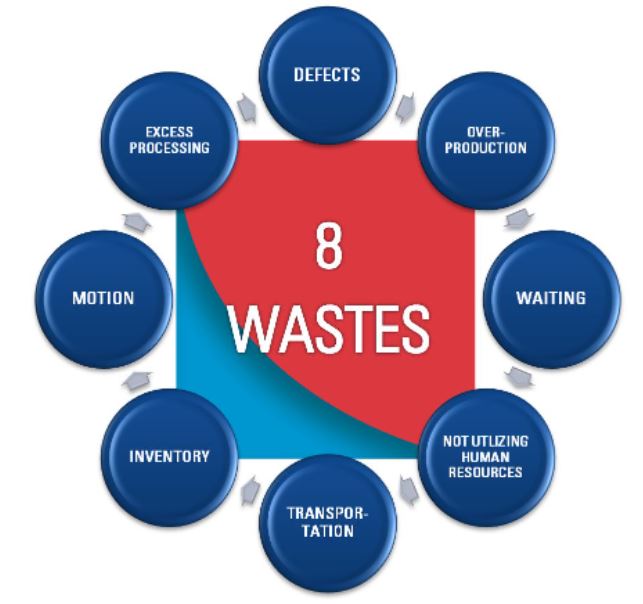
  1. Defects are anything that has been damaged and repaired, replaced or re-done. This includes materials that appear on a Punch List. This results in the re-work or scrapping of the work.
  2. Over production is building to soon, delivery of materials to the project before it is ready to be installed which causes double handling. And may lend to defects if the material is damaged while waiting to be installed. Just in time delivery has materials arriving on the project when it is ready to be installed.
  3. Waiting corresponds to crews waiting on materials or the completion of activities that need to be done prior to another activity happening. Like an RFI being answered. Project equipment like Cranes not being fully utilized is also an example of waiting waste. What we are striving for is continuous flow in people, equipment or materials.
  4. Non-Utilized Talent is failing to make use of the skills or knowledge of your team. A decentralized command structure allows for the craftsmen responsible for producing the work to be more engaged in the process and use their knowledge to improve production.
  5. Transportation is the unnecessary movement of materials or equipment. This often occurs when materials are delivered to a project too soon and need to be moved from one location to another to facilitate work taking place in that area.
  6. Inventory is the over production of materials or equipment resulting in excess. This material is then needed to be stored in the yard or shipped back to the manufacturing facility where it was produced.
  7. Motion waste is identified as the extra steps the craftsmen will take to complete their work. Such as time searching for the correct material or the tools necessary to complete the job. This can also be identified as any lifting, reaching, bending and the excess movement necessary to install the materials.
  8. Excess is the over processing materials in the value chain which may cause double handling or transporting material back to the shop or manufacturer, this often creates storage costs.

These wastes are often identified with the acronym “DOWNTIME”
So how does one go about identifying these wastes? It can often be done with a Gemba walk, by having discussions with the suppliers/manufacturers or employees on the project. Once you understand where one of the 8 wastes is originating you can work to reduce or eliminate its impact on your project.

There is a great book written by Paul Akers ” 2 Second Lean” which goes into his company’s Lean Journey. It covers in detail their journey to reduce waste and their process for continual improvement. This book is readily available on their website and has been made available as a free download.

So the question is posed, how will you identify waste on your project, what will be done to help eliminate its effect and how will this effect project planning in the future?

For the last few weeks I have posted a number of articles related to Lean and my own Lean journey I hope these have provided you some additional tools for you and your team to use. If you are looking to see some of my past articles or would like to see me cover something else related to Lean please feel free to reach out to me here or on my blog www.construction-daily.com

J. Hughes

Superintendent
Sharpening Your Tools – 5’s for Continuous Improvement

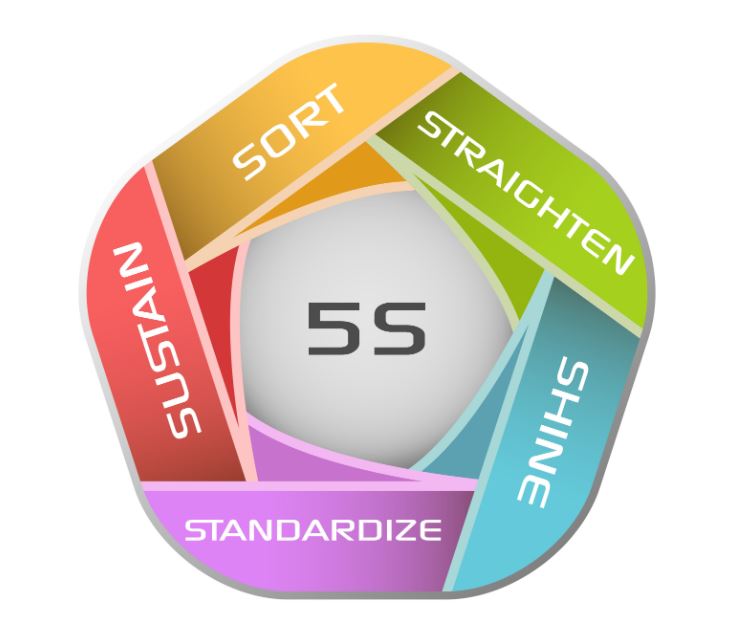
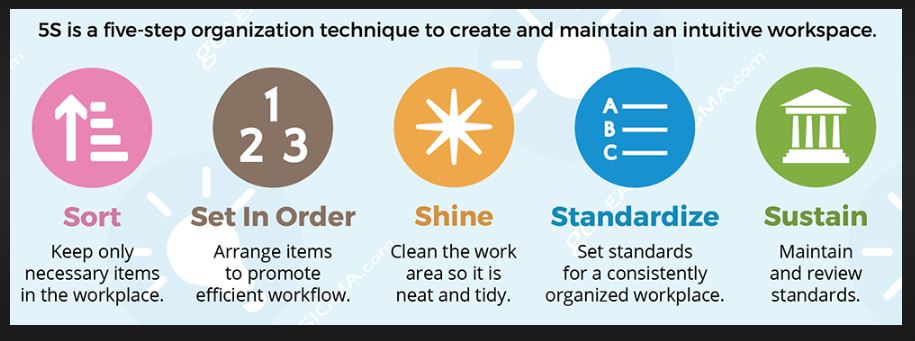
When we talk about Lean what key concepts come to mind, The Last Planner System, Pull Planning, Daily Huddles each of these have their role in your Lean Tool Box. But at the heart of Lean are the 5 S’s. Sort, Straighten, Shine, Standardize and Sustain. It is in these concepts we find the core principles of Lean Construction, the very basis of continuous improvement. At its core we should always be striving to get better and we do this by looking to eliminate waste in every step allowing each step we take to become more efficient.

Lean is continuously looking to improve Safety, Quality, Productivity and Schedule. Each of these are core concepts for Lean Project. By assessing the work as it’s being done, removing the unnecessary, organizing the work and tools logically, keeping the area clean at its essences you are in fact being Lean. By tolerating anything less the project and project team will not operate at its full potential. So how do we utilize the 5 S’s to strengthen these principles.

Lets go over and define each of these so we can better understand the 5 S’s.

  • Sort – What is needed in the next few days and remove anything else as waste.
  • Straighten – Everything has a place, keep it close and organized.
  • Shine – Clean as you go as a daily practice.
  • Standardize – A systems approach to improvement for every task.
  • Sustain – Having a process in place to keep it going.

When implementing Lean on the project it is very important to discuss the expectations early and often, this needs to be discussed with the contractors while they are bidding on the project. Set the expectations of a organized well run project before they sign their subcontracts, spell out the expectations. When new employees are going through the project orientation process discuss how this will look in practice and as you are walking the project its what you tolerate not what you preach, substandard performance will not be tolerated.

Initially as contractors start work on the job they will push the envelope as to what will be accepted, consistency is key, ensuring from day one you keep to your word, everyone including your team will be held to this standard. Not just getting by but improving every day.

How does this happen in practice, materials will not be delivered to sit and wait for installation but will be delivered just in time – nothing hits the ground, everything is in racks and on wheels. The job will be kept clean as the work progresses, not a weekly composite crew but an expectation every crew cleans as they go as the task’s are being completed. Tasks will be reviewed for optimization and standards set to ensure its practice and discussions held looking for improvement.

So how will the 5 S’s benefit the project:

  • Safer Work Environment
  • Higher Quality
  • Increased Productivity
  • Lower Costs
  • Greater Employee Satisfaction
  • Customer Image

These concepts are intended as tools and tools are meant to be sharpened and this happens at your daily stand ups where you discuss material deliveries, as you walk the project and while you are talking with team members in the field. It is not a one and done application and for the 5 S’s to be beneficial to you and the project you must continue to utilized it to improve. It must become part of the project culture and collaborative in nature with your team and the teams that are working on the job. The trade partners should not feel if you are questioning them it is criticism but they should understand the project is looking to improve at every turn.

Now we have covered some basics, how do you expand on this, there are a great number of resources on the internet – Lean Construction Institute, The Lean Builder, and the Lean Construction Blog. Each of these provide great content and have many resources available, some paid and some for free.

Over the last few weeks I have posted a number articles on Lean, including Pull Planning, the Daily Huddle and how to perform a Gemba Walk, if you have any additional topics you would like to see covered let me know and I will try and help. If you would like to see any of my previous post they are available on my blog at www.construction-daily.com.

Once again thank you for joining me on my Lean Journey,

J. Hughes

Superintendent

Gemba Walk a tool for Improvement

Most superintendents spend a significant amount of time walking the project, reviewing progress, verifying quality and checking on worker safety. This is natural for most of us as we have progressed from field positions into positions of leadership and spending time in the field is where we feel most comfortable.

How we use this time varies greatly, is there a way to use this time to improve our project and the project teams? Can we utilize the time we spend in the field by focusing in on the actions of specific trades, how they interact with each other and the work by asking questions and listening to our most valuable asset – the craftsmen.

The Gemba Walk does just that, derived from the Japanese word “Gemba” or “Genchi Gembutsu” means where the work happens, “the actual place” or “Go, Look, See” These walks are important because leaders are encouraged to see what is happening on the project, ask questions and implement change that can have a lasting impact. It is this continuous improvement we should be striving for every day. This is one of the Lean Principles that should be practiced by Lean Leaders.

So how does this look in practice, I believe this walk should be focused: you can perform Gemba walks on Safety, Productivity, Cost Efficiencies among others, so a walk on Logistics may entail the following items, we should initially be observing, looking for logistics bottle necks, seeing how and where materials are stored in relationship to where the work is happening and listening to the employees as to what ideas they may have to improve quality, production or worker safety.

At this time we are not looking to make any drastic change, this is an opportunity to observe, listen, take notes and provide positive feedback. The team should be aware these walks are occurring so as not to feel they are being criticized and they should understand you are looking for process improvement, not to single out an individual. Having Superintendents or Project Managers from other projects join the walk may be helpful as their insight may lend a fresh set of eyes on problems that are being overlooked.

Things that should be noted include what work is currently being performed, what established process are being utilized, were any problems noted and what is the root cause and who identified the issue in the event a follow up needs to happen. Then a review should be performed with follow up documented so everyone can be kept in the loop as to changes that may occur as a result of this walk and plan for next steps.

So the next time you are heading out the door to walk the site, maybe you will consider implementing the Gemba Walk and taking advantage of one the key Lean Tools for continuous improvement.

I hope I have provided a few helpful ideas on performing a effective Gemba Walk – if you have any additional ideas or trick you use to implement a successful Gemba Walk I would appreciate you listing them in the comments section below.

Superintendent

J. Hughes

The 4 Day Work Week – In Construction

I have been considering the possibility of the 4 day work week in construction, is it possible and have you ever been successful in implementing it across a large commercial project. Lately I have been hearing how other industries have had some success in work from home and various forms of hybrid work. So in this post I would like to open up the conversation on how would we implement a similar opportunity for our project teams that manage work on the site.

What would this type of flexible working arrangement look like in construction? Generally speaking the projects I have been a part of typically work a Monday thru Friday schedule with Saturday being the makeup day for lost production or weather day. As the project pushes forward towards substantial completion and the schedules get tight more often than not we end up driving a 6 day schedule trying to make up time that may have been lost due to decisions being made slowly, materials being late or not having enough manpower to keep up with the schedule.

Generally our days start at 6:30 in the morning and we work our project teams until around 4 or 5. Understanding this could we set a standard to work 4/10’s and keep the project on track. Possibly using Friday as the makeup day. Most weeks this would ensure a 4 day work week and it would set a standard of allowing project teams having the entire weekend free.

There are already a number of trades working on the project that have implemented this successfully – I have seen our Elevator/Escalator crews manage this along with the Fire Protection contractors. I believe this allows them to be more productive each day. They set themselves up for this; their materials are ordered and available well in advance and delivered to the project in time to be installed. I believe this assists with the loss productivity daily by having to unroll and roll up your tools allowing for more effective daily production.

What would it take to ensure this, initially you would need to discuss and demonstrate to leadership and the owners on how this would be beneficial to the project. Then as the trade partners are being vetted and placed under contract the schedule would need to reflect this implementation. Material suppliers would need to be notified of the delivery schedule and inspectors would need to be aligned as well. The practical aspect would involve setting up the schedule to reflect the additional hours and the plan would need to show this to keep everyone on the same page.

Some of the challenges would involve the actual craft worker who would be called to make this happen and production cannot be slowed because of the additional hours each day. During the summer months where heat can play a serious role on our projects how do we keep the teams safe while working through the heat? At times we observe when the crafts are working additional hours each day they tend to tire and production slows. Delivery companies would need to be coordinated with to make sure materials are not being delivered when the site is closed. And daily how would we manage the change in time where we are coming to work and its still dark.

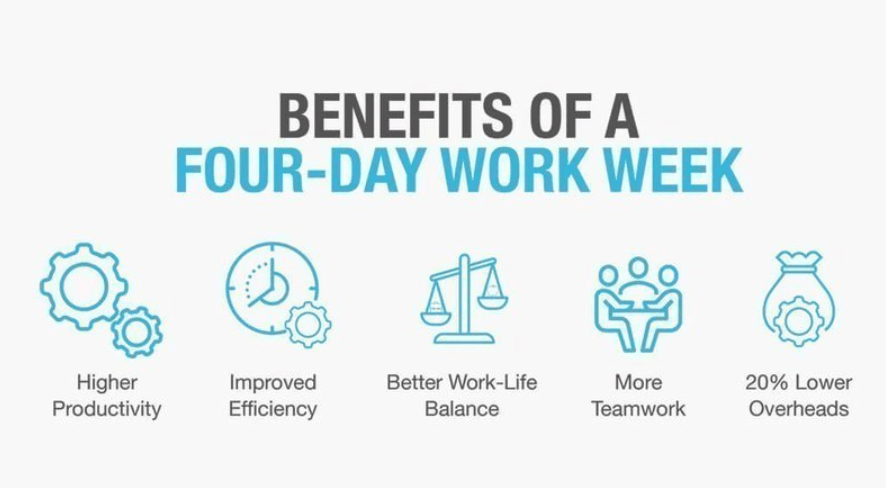
The benefits of a 4 day work week cannot be understated, more opportunity to spend time with your families, better rest and more time away from the project to clear your head. This forward look at the well being of our project teams would play out in a number of ways in both keeping valued employees from burning out and seeking employment elsewhere and could entice some prospective employees to join the team.

This practice is being review by companies large and small and there are stats to prove that companies could see as much as a 20% improvement in production not to mention the benefit of employee wellbeing and engagement. This concept is not new but not to long ago it would have been viewed negatively and you may have been considered a slacker for even considering it. But as this continues to gain momentum the question you may need to ask yourself will you continue to do it the way its always been done or will you look for ways to be innovative and demonstrate to your employees you really care about their time and more importantly their time away from the project.

So I am interested, is this something you have tried or are you currently implementing it and what is your take of the 4 day work week in construction?

We will continue to focus on Lean, Employee Well Being and Improved Productivity over the next few weeks and if you have any additional ideas or items you would like covered please let me know here or my page at Construction-Daily.com

Superintendent

J. Hughes

The Daily Huddle – Effective is Key!

The vast majority of us are on meeting overload most of the time and running from one meeting to the next before having time to act on the commitments made from the last meeting. When reviewing the benefits and whether to schedule another meeting the Lean Daily Huddle is not just another meeting it can be the key to your project success.

The premise around the Daily Huddle is to bring the last planners – the foremen, the men or women actually responsible for performing the work together for a brief meeting every day with the purpose of reviewing where they plan on working, when they will be complete and what do they need from anyone else on the team to ensure they achieve their goal.

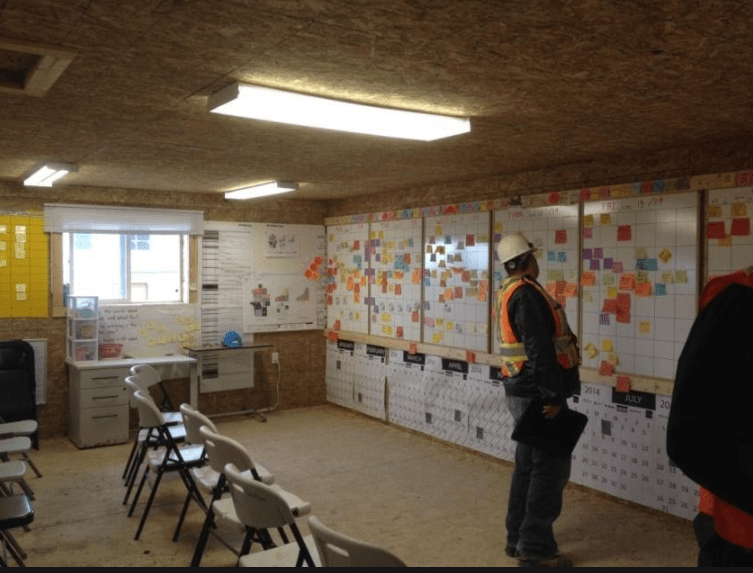
This meeting can be held in the projects main conference room, out near the conex area or in a quiet area on the project. Typically they last between 15-25 minutes but no longer – the goal is to be prepared and ready to go. Each trade will generally discuss what are they doing today and where they intend on being tomorrow, how many men will they have, along with material movements. This is takes place at the 6 weeks boards and will cover the activities listed for that day.

To make this meeting effective you will be implementing a few basic ideas – start and end on time, keep everyone’s attention on the task at hand – no distractions, the work should be done standing at the boards. Because time is limited every one will start to realize what is important and to stay on track, if they start to ramble and possibly cover a topic too specific for everyone in the room then it should be moved to the parking lot, term developed to mean – we can cover this one on one outside of this meeting – move on.

The purpose of this meeting is collaboration and making and keeping promises or commitments in the field, that is why it is important to have the individuals who are performing the work present to commit to what they will achieve. We are looking to identify what work is being planned, where will they be working, how long will it actually take and where will material be stored for quick utilization. This will allow each of the projects sub partners to understand where everyone will be and what they will be doing. Minimize the number of conflicts in the field. During this time any impacts should be identified and traced on a constraints board – listing any information that may be needed, materials that are not available…. yet or possible planned manpower issues.

Your meeting space should have the projects 6 week boards, a few calendars, a number of different plans and site logistic exhibits allowing team member the ability to clearly communicate where they are working and what areas will have materials stored in them. You should also post your Constraint boards and Percent Complete Legends. The intent of this space is to help facilitate effective communication.

So now we have covered the Keys to an Effective Daily Huddle and provided a few helpful ideas on how to manage this meeting – if you have additional ideas or tricks you use to improve the performance of your daily huddle I would appreciate you listing them in the comments section below.

I hope this series continues to be effective for you in your Lean Journey and implementation. We will continue to focus on Lean over the next few weeks and if you have any additional idea or items you would like covered please let me know here or my page at Construction-Daily.com

Superintendent

J. Hughes

Pull Planning for Success

Pull Planning like most successful activities in construction requires a significant amount of coordination and work to to achieve great results. How will you coordinate and develop a successful pull plan meeting and what needs to be coordinated in advance to ensure the outcome you are looking to achieve?

To manage an effective pull planning exercise you will need to establish what portion of the construction schedule you are planning on pulling and identify who will be part of the meeting. It is imperative to have the individuals responsible for executing the work present. You are looking for the Project Managers and Superintendents with your team and your trade partners involved in this specific work phase working together. Additionally the Design Architects, Schedulers and Quality Control Representatives could be present as well.

In preparation for the meeting you will need to identify and distribute to the participates the area of work you plan on pulling. They will need to be very familiar with this phase, available materials and any outstanding issues that may not have been resolved. Each team will need to come to the meeting prepared to be completely honest in the work they can perform and the amount of time it will take to accomplish it making sure not to add any fluff to their durations. They will also need to speak to what will need to be accomplished prior to their work starting.

You will need to coordinate the date a few weeks in advance to ensure everyone needed is available for the exercise. And you will need to have a space large enough to accommodate the activity and plenty room on a wall or table to be able to manage the 6-8 weeks a pull plan is generally expected to review. In our case we set up a long sheet of plotter paper with the weeks identified on the top of the sheet. You will establish the completion milestone you are looking to hit. It is helpful to have a few key interim milestones shown as well, but don’t be to concerned with these yet, the pull planning team will help identify other key milestones as well.

Generally each trade is identified by a specific color post it or colored magnet. To save time you can send these to the contractors ahead of time and they can preload their “stickies” with a task name, duration and the activity they believe needs to be complete prior to them starting their work.

On the day of the exercise plan to have on hand the project contract documents, calendars and a few logistics plans around to help everyone visualize the work area while they are working in addition to some general office supplies that may be needed to help plan the work.

I have found that the General Contractors Project Manager and Superintendent responsible for the scope should not lead the meeting, bring in a moderator this can be a team member familiar with the work to help ask questions and keep the process moving along while the project team works with the various trade partners to answer questions and help in the coordination.

Start with the finish milestone in mind and work backwards from this date placing the various tasks on the exhibit working back toward the start date. Each contractor should be willing and expected to discuss honest expectations and problems they may be anticipating so everyone involved can calibrate on the issues at hand.

Once you get to the start date you can go back through all the dates and durations and see if you have achieved improvement or if necessary you may need to go back through and re-sequence and review coordination to see where there are opportunities to improve or work in areas together to help hit the necessary date.

After reviewing the work it is helpful to memorialize the work by taking a few photos and distributing them to each of the subs involved to remind them of the promises they made during the pull plan. Now you are ready to develop the tasks and insert them into your project schedule – hopefully if everyone was honest and worked together you will see improvement, if not, you have identified a bust in your schedule and you will need to keep working through the work packages pulling them back as well.

So how will this exercise help in the development of your schedule planning by providing Collaboration, Transparency and Optimization your teams will learn to communicate clearly and work towards the goal of completing these work packages on time. It will also help foster common goal of working together to complete the work on time.

I will continue to review some Lean Best Practices over the coming weeks to help create a better understanding of how Lean can be of benefit on your projects. I can be reached here on LinkedIn or on my web site Construction-Daily.com if you have comments or would like to see something specifically reviewed here.

J. Hughes

Superintendent

Developing a Lean Culture – what exactly does that mean?

For the last few years I continue to hear the buzz word Lean thrown about similar to the way I heard about Safety in 90’s and LEED in the 2000s. It seems everyone is doing it but what exactly does it look like on projects. Is it a Daily Huddle, is it Six Week Boards, do we walk the project looking for Waste. And exactly how does this benefit our project and customer?

Initially I would say that Lean is a culture of respect, one that honors the craftsmen, the work and the customer’s goals for the project. But where did all this come from and what does this look like in practice?

We know it was develop by Toyota and published around 2001 and  issued in a company document identified as the Guiding Principles of Toyota. This was later elaborated on and published in 2004 by Dr. Jeffrey Liker in his book called The Toyota Way. He calls it a system designed to provide tools for people to continuously improve their work and he identified 14 management principles.

https://www.amazon.com/s?k=The+toyota+way&crid=24RV6D64YQITU&sprefix=the+toyota+way%2Caps%2C109&ref=nb_sb_noss_1

Within Lean there are a few basic tenants –

  • Striving for Continuous Improvement
  • Respect for People
  • Focus on the customers goals
  • Team Communication
  • Remove Variation
  • Eliminate Waste

We must change the way we think about the tasks on our projects and how do we improve the processes, how can we identity value and eliminate waste every step of the way. And once this is complete how do we relook at the task and eliminate waste again – continuously reviewing the operations by making small changes – it can always be better.

This is called PDCA – Plan, Do, Check, Act, in this we identify the opportunity, test at small scale, review the results and act based on the final outcome, this process is repeated over and over again until nothing more can be improved upon in this cycle. These cycles often conclude with a Plus/ Delta review of what went good and what could be changed to improve the process just a little more.

Understanding the possibility of improvements should ultimately come from the people performing the work generally referred to as the last planner. It is from here we see from the men and women doing the work the most opportunity to identify a few of the 8 wastes – waste in motion, waiting, overproduction, transportation, defects and how these can be turned into improvements.

Some of this comes from identifying the customer goals for the project and providing exactly what the customer wants in terms of when the project is needed, the budget that was defined, ensuring the right quality is delivered to ultimately satisfy the requirements of the job.

To ensure this happens team communication is critical, this can be performed through a variety of means often in the form of pull planning, visual diagrams, daily huddles and six week boards. All these tools lend to communication on the project in a way that is collaborative with all members of the team participating, showing what comes from those meetings in terms of visual plans and tracking to see if you are implementing what was promised at each meeting.

One of the goals on our projects should be predictability, understanding when materials will be delivered to the project and when the trade can perform their work and importantly when the next trade can start their work and maintain a consistent flow without a lot of starts and stops. We should be minimizing waste and rework on the project which ultimately costs everybody.

Now we have covered some basics but where do you go from here, there are a number of great resources available to you on the internet – the Lean Construction Institute, The Lean Builder and the Lean Construction Blog. Each of these provide great content and have many resources available some paid and some for free. I have generally found that most of the practitioners are very open and free with their knowledge and are will to help if you have questions.

I am still trying to fully answer the questions I posed above and I will always be on my own continuous improvement journey but that being said if I can be of help please let me know. Over the next few weeks we will drill down on each of these topics and a few more with a goal of providing you a guide to implementing a Lean Culture on your project and in your company.

I can be reached here on LinkedIn or on my web site Construction-Daily.com if you have comments or would like to see something specifically reviewed here.

J. Hughes

Project Superintendent

https://www.linkedin.com/pulse/developing-lean-culture-what-exactly-does-mean-john-j-hughes

Construction Career Days – a way to Build Your Future.

On October 25th the Construction Education Foundation (CEF) along with the National Center for Construction Education and Research (NCCER) hosted their annual Build Your Future Career Day.  The event was  held at North Lake College West and CEF’s  DFW Training Center, which is a 60,000 sq ft facility that has a combination of Class Rooms and Labs on the DFW International Airport property. The purpose of the event is to help high school students who may be interested in learning about construction trades and inform them of what options are available within each craft.  This event and show aligns closely with TEXOs Build Texas Proud! campaign and their desire to promote construction in North Texas as a great opportunity as a career choice and a way to build your future.

There were over 2000 students brought in from school districts around Dallas / Fort Worth, each of these schools selected from their own career training program a select group of interested and qualified students. I had the opportunity to speak with a number of these teachers and students during the day and came away with mostly good comments and questions about opportunities in the construction field.

I have written on this topic in the past, Build Texas Proud!  High School Outreach. As we continue to experience a sever shortage in manpower and qualified craftsmen how does reaching out and helping to develop this talent benefit our community? At what point is the contact most important and where will we see the most impact for the effort provided high school or possibly middle school? Can a partnership be developed between the Student, Parent and School to help identify and guide potential students through high school and then provide them a construction job when they graduate.

One of the most important facets of a construction career day like Build Your Future is the students are able to see the representatives from the various craft companies and they will be able discuss which craft seems most in demand, what is your day going to be like, what kind of pay could be expected and where the benefits in construction lay.

In addition to the booths and equipment there were a number of competitions set up to show case various fields in the industry providing a hands on opportunity at doing the work.

There were numerous booths set up by General Contractors, Sub Contractors, Suppliers and Manufacturers each there to talk about their industry and where the jobs are and what benefits you would enjoy by working with them. They fielded a number of questions about their specific industry.

CEF was created as an alliance between the members of the Associated Builders and Contractors of America, the Associated General Contractors and the American Subcontractors Association and began around 1981. Its purpose and goal is to provide the construction industry with the most qualified technically trained people from Craft Workers to Supervisory level employees. The program has in place relationship with North Lake College to allow college credit for some of their courses.

TEXO is the largest commercial contractors association in Texas and is a blend of the Associated Builders and Contractors and the Associated General Contractors of America and is made up of over 300 commercial contractors who perform about 5 billion in work annually. Its primary focus is in 5 areas, Safety/Health and Environmental Issues/Skill-Craft workforce development/Professional Training and Education/Community and Networking Events.

The relationship between these two organizations allow for a harmonization between the development of a work force by CEF and a connection to the contractor membership that TEXO serves. By connecting each of these organizations with our future workforce by way of our high schools craft programs hopefully we will soon see the benefits and gains from programs like Build Your Future.

If you are in North Texas and are currently managing a high school career program and you would like to have a group come speak at your career fair you can reach out to me  or TEXO and we can help facilitate the conversation.

Also if you have any ideas on how this type program has been successful to you or your organization I would like to hear about it. You can reach out to me directly by connecting on the link below.


J. Hughes
Project Superintendent

If you like this article please go see my blog at Construction-Daily.com and follow me for more articles and updates.

Construction-Daily.com

Construction in the Community the Project that Gives Back.


th

Each year my company participates in community build project called Hearts and Hammers. The concept is familiar to each of you, the all volunteer organization partners with Community Leaders, Churches and Code Enforcement Officials to identify homeowners in need and they in turn partner with Hearts and Hammers and our volunteers to provide some assistance. The is a great way for construction companies, architectural firms and our partners to give back in a way that makes since. We typically have access to the people, materials and generally possess the know how to assist in this kind of community project.

Over the decade or so I have participated with Hearts and Hammers we have worked on a number of these builds, we generally start out with a introduction to the property and the homeowner. At some point a walk is scheduled to determine what needs can be met. Over the next couple months materials are acquired, volunteers are recruited and a schedule is set.

The next part is a miracle, my team is but one piece of this puzzle. Hearts and Hammers normally is coordinating 35-60 of these project homes to occur over two weekends at the same time in September. Generally we have around 40 volunteers show up on our project house each of the two Saturday’s and we spend the day scraping, removing/replacing rotten wood, caulking, priming and repainting, building decks or porches, planting and cleaning all around the house. The transformation is amazing and this is occurring on around 50 homes at the same time.

OLYMPUS DIGITAL CAMERA

OLYMPUS DIGITAL CAMERA

In most cases the home owners have never been touched in this way before and are simply in awe that so many people would turn out to help them with no expectation of reward or repayment. And the volunteers are equally benefited in ways I could not have realized prior to being a part of a team like this. There are very few team building exercises that allow individuals to get in the trenches with each other and sweat, solve problems and see a positive result in the course of a day. When you add to this the opportunity to share this experience with your partners in the industry you are getting a double dose of community in action.

So how does your organization give back to the community?

What team building exercises do you participate in to create a family atmosphere within your company?

How does this added dimension of community add value to your employees?


J. Hughes

Project Superintendent
If you like this article please go see my blog at Construction-Daily.com and follow me for more articles and updates.

Construction-Daily.com


Cell Phone Use – Productivity vs Distraction

One of the things I notice more and more as I walk thru the office or on the job site is the prolific use of cell phones, every employee from laborer to senior manager has one provided by their company or a personal device with them at all times. In 1999 I was working on a project in Atlanta as a Superintendent and was provided my first company cell phone and at that time it was a little unusual to see one on the project.  A few years later Nextel started promoting push to talk, the Blackberry was the next in a series of field communication improvements and finally we are seeing the smart phones with apps that provide all kinds of construction solutions. I am not saying we haven’t improved communication, or improved the time it takes to get changes into the field and reaped the rewards of immediate group communications in the event of an onsite emergency.

My concern goes more to the casual use of phones on the project, random conversations between family and friends, texting with your buddies on the upcoming game, the numerous diversion games like Angry Birds and so many social media sites I cannot begin to list them all. What does all the indiscriminate use of cell phones cost us in terms of productivity loss and can this be quantified into financial cost as well. Is there a correlation between accidents and the use of cell phones and distracted driving or distracted walking for that matter.

To gain a little insight on the amount of time we may be talking about the National Bureau of Economic Research published a report that stated employees spend as much as 55 minutes a day on non-work related internet tasks and a similar poll by the NY Post stated employees spent as much as 42 minutes on personal communications at work per day.

So now for some simple math if you work an average of 100 people a day on your project and they spend an average 50 minutes on their telephones doing non-work related tasks that is a whopping 5000 minutes or 83.33 hours per day and at an average hourly rate of $15.00 per hour you could be loosing $1250.00 per day to the internet, $6250.00 per week or $324,000.00 per year. This of course does not include any of the fringe benefits or taxes employers pay as a cost of keeping the employee on the books and assumes a very conservative hourly rate.

I think the costs are a lot higher as this does not count the cost of once distracted, how much time does it take the employees to become re-engaged in their work and does not even begin to imagine the cost of work if it is not installed correctly or an accident occurs.

If I multiply this loss across multiple job sites and companies we are talking about millions upon millions of dollars in lost productivity and revenue.

So this is the observation and my swag at cost but what can be done to resolve the issue?

Can we effectively ban job site cell phone use to all but employees deemed by their employer to require a cell phone for work use?

Can we provide additional project training on what is expected and a hardhat identification sticker showing you have been authorized to utilize a cell phone on the project?

Can we implement a policy  stating cell phone use other than by those who have been authorized and trained in its use is prohibited except in extreme emergencies?

How do you manage this same problem in the office and the desktop computer or device?

What would our work force say or do for that matter, I know as time has gone on I struggle with the use of phones or IPads around the office for non-work related tasks, would the millennials we all employee just quit and move on because of the current work climate and how would they would perceive this effects them and their freedoms?

What are your current policies on phone use while on the project, do you actively enforce your policies, what do you think this costs you in terms of revenue?

J. Hughes

Project Superintendent
If you like this article please go see my blog at Construction-Daily.com and follow me for more articles and updates.

Construction-Daily.com