
Recently OSHA revised the Silica standard to include some new provisions and requirements, but what does this mean to you, the General Contractor, the Sub-Contractor or the employee.
The recent awareness of Silica and this standard should not be news to you, the US Department of Labor originally identified Silica as a hazardous substance in the 1930’s, in 1971 when OSHA was created standards were set as to permissible exposure limits (PELS). In 2013 after reviewing new scientific data, holding public hearings and building industry consensus the new rule was proposed. In the Construction Industry compliance will be required by September 23, 2017 with General Industry and Hydraulic Fracturing compliance will be required by June 23rd of 2018.
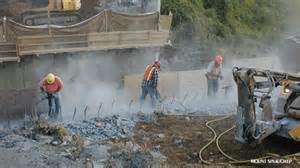
So are you affected by this change, currently OSHA estimates around 2 million construction workers are exposed to respiratory crystalline silica on 600,000 worksites and 840,000 are exposed to levels that exceed the new permissible limits. Exposure occurs while using masonry saws, grinders, drills, using heavy equipment among other tasks.
So what will be required by you the employer, as an employer you will be required to limit employee exposure to respiratory crystalline silica by fully and properly utilizing one of the methods identified in Table 1 of the standard or you can measure independently an employee’s exposure to silica and make a decision on what controls to use. In addition to which method you choose you will be required to implement a written exposure control plan, identify a competent person, restrict housekeeping that exposes employees to silica, train and communicate to workers the hazards associated with working around silica and keep records exposure data and medical exams.
So this is all good information right, but does this affect me, if you work around sand, concrete, masonry, stone, certain drywall joint compounds, dirt…. yes dirt, silica is a naturally occurring mineral and if you work in the excavation industry you may be exposing your employees to silica. You need to be prepared to implement this standard. Even though the law has been passed OSHA has deferred enforcement until September 23rd of 2017 allowing the construction industry time to get prepared.
Employers who do not utilize Table 1 will need to measure the amount of silica their employees are exposed to, if you expose your employees to a level of silica at or above 25 micrograms of silica per cubic meter of air averaged over an eight hour day you are required to act. At 50 micrograms of silica per cubic meter of air averaged over an eight hour day you are required to protect. At this point you will be required to provide dust controls and/or provide respirators to workers when controls cannot limit exposure levels to the permissible exposure limits.
So per the road map laid out by OSHA the requirements for meeting the standard apply if your employees could be exposed to respirable crystalline silica under any circumstances, including the failure of engineering controls. If you can answer no to this statement then no other action is required but if you can answer yes, they could be exposed then you need to move forward with compliance.
Some employees are only briefly exposed and that involves occasional tasks like those employees who are carpenters, plumbers, and electricians who’s only contact may be briefly drilling a hole in concrete, mixing concrete for post holes, pouring concrete footers and foundations or removing form work. If this is their only exposure then they can be reasonably be expected to remain under the limits requiring protection.
Within Table 1 there a references to Water Delivery Systems, these systems must be developed specifically related to the type tool being utilized to make sure they are applying the correct rate of water flow to keep exposure below the maximum levels and eliminate visible dust. Any slurry generated by these activities must be cleaned up immediately so as not to create any secondary exposures to the drying silica dust. When required to use a Dust Collection System they must not create new hazards by blocking the view of the operator or interfering with the safety mechanisms of the equipment. Some of the Table 1 standards require the use of a cyclonic pre-separator or filter cleaning devices. Other tasks in the table require enclosed cabs for the heavy equipment being used and some specific requirements include door seals, gaskets in good working order, positive pressure in the cab, filtered intake air, and heating and cooling capabilities in the cab of the equipment.
As a part of the standard you will be required to implement a Written Exposure Control Plan this plan will include a description of tasks where exposure to silica is possible. Identify equipment used and materials that contain silica and whether the tasks are performed indoors or outdoors
In addition you will need to identify a competent person who can identify the silica hazards, is authorized to promptly act and eliminate the hazard and has the knowledge to implement your silica written exposure control plan,
Housekeeping practices must be monitored to make sure they do not exceed the PELs for silica, when cleaning up dust that may contain silica dry brushing is not allowed. Cleaning with compressed air is not allowed unless used with a ventilation system.
Employers must train employees and inform on the hazards associated with silica and the methods used to limit their exposure, and by complying with the hazard communication standard 1910.1200. Identify what tasks may expose the employee to silica and what specific measures are being taken to protect the employee. They must be trained each time they are assigned to a new task involving respirable silica. In addition to making a copy of the standard available.
You will be required to make an initial or periodic medical examinations of employees required by the silica standard to wear a respirator more than 30 days per year, regardless of how long they wear the respirator each day. The types of records that will need to be kept include Air Monitoring Data, Objective Data and Medical Surveillance.
So what do you think, could your employees be exposed to respirable silica? Do you know all you need to know about this silent killer? And is your company prepared once OSHA starts enforcement of this revised standard on September 23rd? Have you developed your Written Exposure Control Plan and developed your best practices. If you have additional questions please feel free to reach out to me and I will do my best to answer your questions, I would also suggest you review the OSHA standard as it applies to your work and start to make a determination on how you will come into compliance.
John Hughes
Project Superintendent
Web Link: OSHA Silica Standard
Information contained herein was gathered for this blog in part off the OSHA website and official OSHA documents. The information provided here is intended to inform and is not considered the complete OSHA Standard or eliminate your responsibility to protect your workers if you require additional information please consult the standard or appropriate authorities.
 Construction Daily