The 4 Day Work Week – In Construction

I have been considering the possibility of the 4 day work week in construction, is it possible and have you ever been successful in implementing it across a large commercial project. Lately I have been hearing how other industries have had some success in work from home and various forms of hybrid work. So in this post I would like to open up the conversation on how would we implement a similar opportunity for our project teams that manage work on the site.

What would this type of flexible working arrangement look like in construction? Generally speaking the projects I have been a part of typically work a Monday thru Friday schedule with Saturday being the makeup day for lost production or weather day. As the project pushes forward towards substantial completion and the schedules get tight more often than not we end up driving a 6 day schedule trying to make up time that may have been lost due to decisions being made slowly, materials being late or not having enough manpower to keep up with the schedule.

Generally our days start at 6:30 in the morning and we work our project teams until around 4 or 5. Understanding this could we set a standard to work 4/10’s and keep the project on track. Possibly using Friday as the makeup day. Most weeks this would ensure a 4 day work week and it would set a standard of allowing project teams having the entire weekend free.

There are already a number of trades working on the project that have implemented this successfully – I have seen our Elevator/Escalator crews manage this along with the Fire Protection contractors. I believe this allows them to be more productive each day. They set themselves up for this; their materials are ordered and available well in advance and delivered to the project in time to be installed. I believe this assists with the loss productivity daily by having to unroll and roll up your tools allowing for more effective daily production.

What would it take to ensure this, initially you would need to discuss and demonstrate to leadership and the owners on how this would be beneficial to the project. Then as the trade partners are being vetted and placed under contract the schedule would need to reflect this implementation. Material suppliers would need to be notified of the delivery schedule and inspectors would need to be aligned as well. The practical aspect would involve setting up the schedule to reflect the additional hours and the plan would need to show this to keep everyone on the same page.

Some of the challenges would involve the actual craft worker who would be called to make this happen and production cannot be slowed because of the additional hours each day. During the summer months where heat can play a serious role on our projects how do we keep the teams safe while working through the heat? At times we observe when the crafts are working additional hours each day they tend to tire and production slows. Delivery companies would need to be coordinated with to make sure materials are not being delivered when the site is closed. And daily how would we manage the change in time where we are coming to work and its still dark.

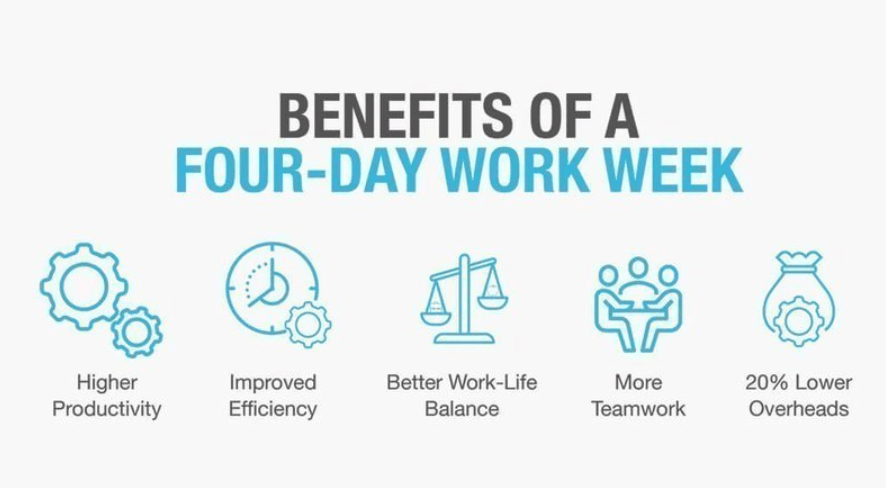
The benefits of a 4 day work week cannot be understated, more opportunity to spend time with your families, better rest and more time away from the project to clear your head. This forward look at the well being of our project teams would play out in a number of ways in both keeping valued employees from burning out and seeking employment elsewhere and could entice some prospective employees to join the team.

This practice is being review by companies large and small and there are stats to prove that companies could see as much as a 20% improvement in production not to mention the benefit of employee wellbeing and engagement. This concept is not new but not to long ago it would have been viewed negatively and you may have been considered a slacker for even considering it. But as this continues to gain momentum the question you may need to ask yourself will you continue to do it the way its always been done or will you look for ways to be innovative and demonstrate to your employees you really care about their time and more importantly their time away from the project.

So I am interested, is this something you have tried or are you currently implementing it and what is your take of the 4 day work week in construction?

We will continue to focus on Lean, Employee Well Being and Improved Productivity over the next few weeks and if you have any additional ideas or items you would like covered please let me know here or my page at Construction-Daily.com

Superintendent

J. Hughes

Construction Career Days – a way to Build Your Future.

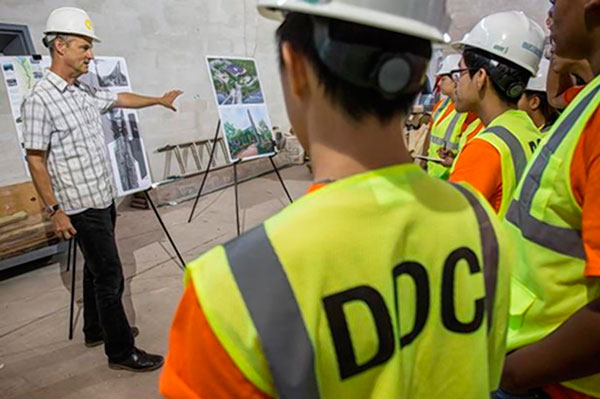
On October 25th the Construction Education Foundation (CEF) along with the National Center for Construction Education and Research (NCCER) hosted their annual Build Your Future Career Day.  The event was  held at North Lake College West and CEF’s  DFW Training Center, which is a 60,000 sq ft facility that has a combination of Class Rooms and Labs on the DFW International Airport property. The purpose of the event is to help high school students who may be interested in learning about construction trades and inform them of what options are available within each craft.  This event and show aligns closely with TEXOs Build Texas Proud! campaign and their desire to promote construction in North Texas as a great opportunity as a career choice and a way to build your future.

There were over 2000 students brought in from school districts around Dallas / Fort Worth, each of these schools selected from their own career training program a select group of interested and qualified students. I had the opportunity to speak with a number of these teachers and students during the day and came away with mostly good comments and questions about opportunities in the construction field.

I have written on this topic in the past, Build Texas Proud!  High School Outreach. As we continue to experience a sever shortage in manpower and qualified craftsmen how does reaching out and helping to develop this talent benefit our community? At what point is the contact most important and where will we see the most impact for the effort provided high school or possibly middle school? Can a partnership be developed between the Student, Parent and School to help identify and guide potential students through high school and then provide them a construction job when they graduate.

One of the most important facets of a construction career day like Build Your Future is the students are able to see the representatives from the various craft companies and they will be able discuss which craft seems most in demand, what is your day going to be like, what kind of pay could be expected and where the benefits in construction lay.

In addition to the booths and equipment there were a number of competitions set up to show case various fields in the industry providing a hands on opportunity at doing the work.

There were numerous booths set up by General Contractors, Sub Contractors, Suppliers and Manufacturers each there to talk about their industry and where the jobs are and what benefits you would enjoy by working with them. They fielded a number of questions about their specific industry.

CEF was created as an alliance between the members of the Associated Builders and Contractors of America, the Associated General Contractors and the American Subcontractors Association and began around 1981. Its purpose and goal is to provide the construction industry with the most qualified technically trained people from Craft Workers to Supervisory level employees. The program has in place relationship with North Lake College to allow college credit for some of their courses.

TEXO is the largest commercial contractors association in Texas and is a blend of the Associated Builders and Contractors and the Associated General Contractors of America and is made up of over 300 commercial contractors who perform about 5 billion in work annually. Its primary focus is in 5 areas, Safety/Health and Environmental Issues/Skill-Craft workforce development/Professional Training and Education/Community and Networking Events.

The relationship between these two organizations allow for a harmonization between the development of a work force by CEF and a connection to the contractor membership that TEXO serves. By connecting each of these organizations with our future workforce by way of our high schools craft programs hopefully we will soon see the benefits and gains from programs like Build Your Future.

If you are in North Texas and are currently managing a high school career program and you would like to have a group come speak at your career fair you can reach out to me  or TEXO and we can help facilitate the conversation.

Also if you have any ideas on how this type program has been successful to you or your organization I would like to hear about it. You can reach out to me directly by connecting on the link below.


J. Hughes
Project Superintendent

If you like this article please go see my blog at Construction-Daily.com and follow me for more articles and updates.

Construction-Daily.com

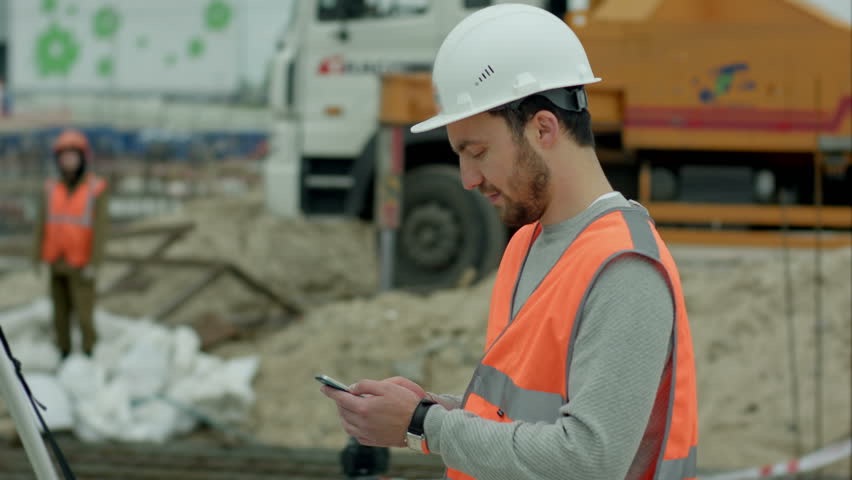
Cell Phone Use – Productivity vs Distraction

One of the things I notice more and more as I walk thru the office or on the job site is the prolific use of cell phones, every employee from laborer to senior manager has one provided by their company or a personal device with them at all times. In 1999 I was working on a project in Atlanta as a Superintendent and was provided my first company cell phone and at that time it was a little unusual to see one on the project.  A few years later Nextel started promoting push to talk, the Blackberry was the next in a series of field communication improvements and finally we are seeing the smart phones with apps that provide all kinds of construction solutions. I am not saying we haven’t improved communication, or improved the time it takes to get changes into the field and reaped the rewards of immediate group communications in the event of an onsite emergency.

My concern goes more to the casual use of phones on the project, random conversations between family and friends, texting with your buddies on the upcoming game, the numerous diversion games like Angry Birds and so many social media sites I cannot begin to list them all. What does all the indiscriminate use of cell phones cost us in terms of productivity loss and can this be quantified into financial cost as well. Is there a correlation between accidents and the use of cell phones and distracted driving or distracted walking for that matter.

To gain a little insight on the amount of time we may be talking about the National Bureau of Economic Research published a report that stated employees spend as much as 55 minutes a day on non-work related internet tasks and a similar poll by the NY Post stated employees spent as much as 42 minutes on personal communications at work per day.

So now for some simple math if you work an average of 100 people a day on your project and they spend an average 50 minutes on their telephones doing non-work related tasks that is a whopping 5000 minutes or 83.33 hours per day and at an average hourly rate of $15.00 per hour you could be loosing $1250.00 per day to the internet, $6250.00 per week or $324,000.00 per year. This of course does not include any of the fringe benefits or taxes employers pay as a cost of keeping the employee on the books and assumes a very conservative hourly rate.

I think the costs are a lot higher as this does not count the cost of once distracted, how much time does it take the employees to become re-engaged in their work and does not even begin to imagine the cost of work if it is not installed correctly or an accident occurs.

If I multiply this loss across multiple job sites and companies we are talking about millions upon millions of dollars in lost productivity and revenue.

So this is the observation and my swag at cost but what can be done to resolve the issue?

Can we effectively ban job site cell phone use to all but employees deemed by their employer to require a cell phone for work use?

Can we provide additional project training on what is expected and a hardhat identification sticker showing you have been authorized to utilize a cell phone on the project?

Can we implement a policy  stating cell phone use other than by those who have been authorized and trained in its use is prohibited except in extreme emergencies?

How do you manage this same problem in the office and the desktop computer or device?

What would our work force say or do for that matter, I know as time has gone on I struggle with the use of phones or IPads around the office for non-work related tasks, would the millennials we all employee just quit and move on because of the current work climate and how would they would perceive this effects them and their freedoms?

What are your current policies on phone use while on the project, do you actively enforce your policies, what do you think this costs you in terms of revenue?

J. Hughes

Project Superintendent
If you like this article please go see my blog at Construction-Daily.com and follow me for more articles and updates.

Construction-Daily.com


Build Texas Proud! High School Outreach

HS Interns

I wrote a brief article last week discussing the value of Retaining your Best Employees vs Retraining New. Another idea worth considering is a High School Out Reach program, what better way is there to develop a work force than to reach potential employees before they get out of High School.  By partnering with your local school district and helping them develop and manage a quality career center you can influence the skills and the knowledge of the next generation of craftsman. By throwing a broad net our schools have the ability to bring in a wide variety of potential candidates and educate them in a way that makes them immediately valuable to the construction work force.  As they get closer to graduation and they start to identify a potential trade with specialized training and the opportunity to get some scheduled job site experience in the form of in school on the job training and summer internships it might allow them to graduate from high school with a license or journeyman’s card and a job offer from a company who would continue investing in their future and building their career. Part of this initiative would be the education and craft training but another aspect would be informing and educating the parents who would be instrumental in guiding these students and supporting their decision to enter the construction field.

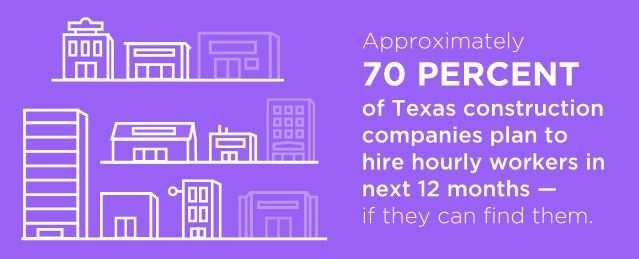
Now you might be thinking this could be monumental task, convincing the school districts to take on this challenge, developing the program, assisting with its management but the reality is we are in a industry that needs young motivated individuals who can start and grow into a industry that by all accounts is losing and retiring more than its bringing into the field.

Here’s where we can make a difference, many school districts are already working in this direction and our local building associations are also moving forward with initiatives that will develop these programs as well but what they are lacking is volunteers to help spearhead and organize the programs and also companies willing to hire these recently trained workers into the industry.

Capture

So how can you continue to grow your industry, to lead in your community and to meet the demands of a growing construction marketplace, get involved, become part of the solution and make your mark on the next generation of builders. Help develop a High School Outreach Program and you will be part of the BuildTexasProud! campaign.

So I am interested in what your company or you are doing to assist in a High School Outreach program, where are you success stories, please post in the comments below.

In addition if you have a interest in this type of investment in our future reach out to me and lets discuss how to get this moving forward, I would like to help.

J. Hughes
Project Superintendent

If you like this article please go see my blog at Construction-Daily.com and follow me for more articles and updates.

Construction-Daily.com

Retaining your Best Employees or Retraining New – Mentoring may be key.

lds-jobs-mentoring-construction-1322606_550x280

It seems in the last few years I have been in a number of conversations and read any number of articles relating to the lack of qualified individuals interested in or entering the construction field. I am sure this is not news to you, if you hold any type of position where your responsible for hiring new talent you are very aware that the qualified candidates entering the field or available on the bench are just non-existent. So part of the problem is hiring new men or women to join your team, but what I believe is a bigger issue is how do we keep the team we have from leaving and going to the other guy.

If you look within your company you have a number of employees who have been around a few years, many have come up through the ranks and are really starting to show promise but just when all your hard work and training seems to be paying off they are suddenly turning in their two weeks and leaving for what they believe are greener pastures.

My question is why after around 4-6 years are we losing what may be the next level of leadership in the company. The possibilities may include a pay or a benefits gap between what you are paying and what the other guy is willing to pay, another may be leadership has not done a great job of laying out a road map or growth plan for this employee, or it may be a lack of a connection within the company, a lack of belonging. All of these issues could be solved with a individual Sr Level Mentor and a formal mentoring program.

If a relationship between leadership and the individual exists a stronger bond is developed, there is a realization that men don’t go to battle and sacrifice for the company they do it for their brother, their teammate, their friend.  So how do we create this relationship within our companies. Most often this bond is created over time, a few meals, a few events, a couple of challenges overcome. Some of this bond can be developed but mostly it needs to occur organically or it won’t last it wont be authentic.

This initially could start with a conversation about their family and their desire for their future and where they see their career in the next year, 3 and 5 years.  Then with this information a road map can be developed to help that individual achieve their goals.

The opportunity to check in a few times a quarter, a couple meals, and possibly an activity, will assist in this starting to bear fruit. The key to this type of relationship working is value, the employee must see value in the time they are investing and the Mentor must receive value as well. They each gain from this relationship, the employee gets to ask questions in a non-confrontational open environment, they are introduced to concepts that could take a individual decades to learn and the Mentor invests his time to see how their knowledge and investment will start to develop a new cadre of leaders.

So what if you have never mentored anyone you may not know what you can do or provide in terms of mentorship.

  • By taking them to lunch or dinner, getting to know them and assisting them with mapping out their goals, you may find that the individual you are mentoring may not know exactly what they want or how to get there other than they want a better position and more money.
  • Helping them to identify and find meaning in their job is a big part of this communication. What aspects of your job do you enjoy, what aspect is mundane, where do you feel most valuable at work and where do you feel the least. These questions and more are all part of the mentoring conversation that will help you guide their career decisions.
  • Consider recommending books – there is a phenomenal amount of information available via books. Leadership, Persistence, Goal Setting  the options are limitless and the cost is very little. After reading the book you could get together and discuss what can be applied in their job to help achieve their goals.
  • Introduce them to a blog or podcast that may help guide them along the way.
  • A local course or conference could be provided with little effort but the important part as a mentor is following up and making sure there is understanding of what was learned and how to apply it to your job.
  • If you are fortunate enough to have a number of individuals you are guiding you could consider setting up a master mind group of sorts allowing them to self answer questions and further create the glue keeping them in the company.
  • Depending on availability, if you have access to game tickets, golf courses, fishing, or access to a hunting lease each of these are great team building opportunities, and allowing you a chance to experience life together.
  • Most companies have picnics, volunteer projects, associations and the like, these are excellent opportunities for the mentor and the mentee to get together and serve in a program together further developing this bond.

The possibilities are limitless and costs can be managed to where it does not get out of hand but provides the right amount of value to both the Mentor and the Mentee. Also this does not need to be a un-ending commitment this relationship could last a few months to a couple years but at some point it may be time to move on and either pass this relationship off to another trusted mentor or as mentor you should be training the mentee in the art of becoming a good mentor and allowing them to carry the torch forward to the next level or employee.

What is the cost of a program like this and what is the value of retaining your best talent at the time where they are beginning to show promise. I am sure you know the cost of recruitment and training and that far exceeds the cost of keeping you current staff and minimizing staff turnover, improving moral and a family like bond for generations to come.


J. Hughes
Project Superintendent

If you like this article please go see my blog at Construction-Daily.com and follow me for more articles and updates.

Construction-Daily.com